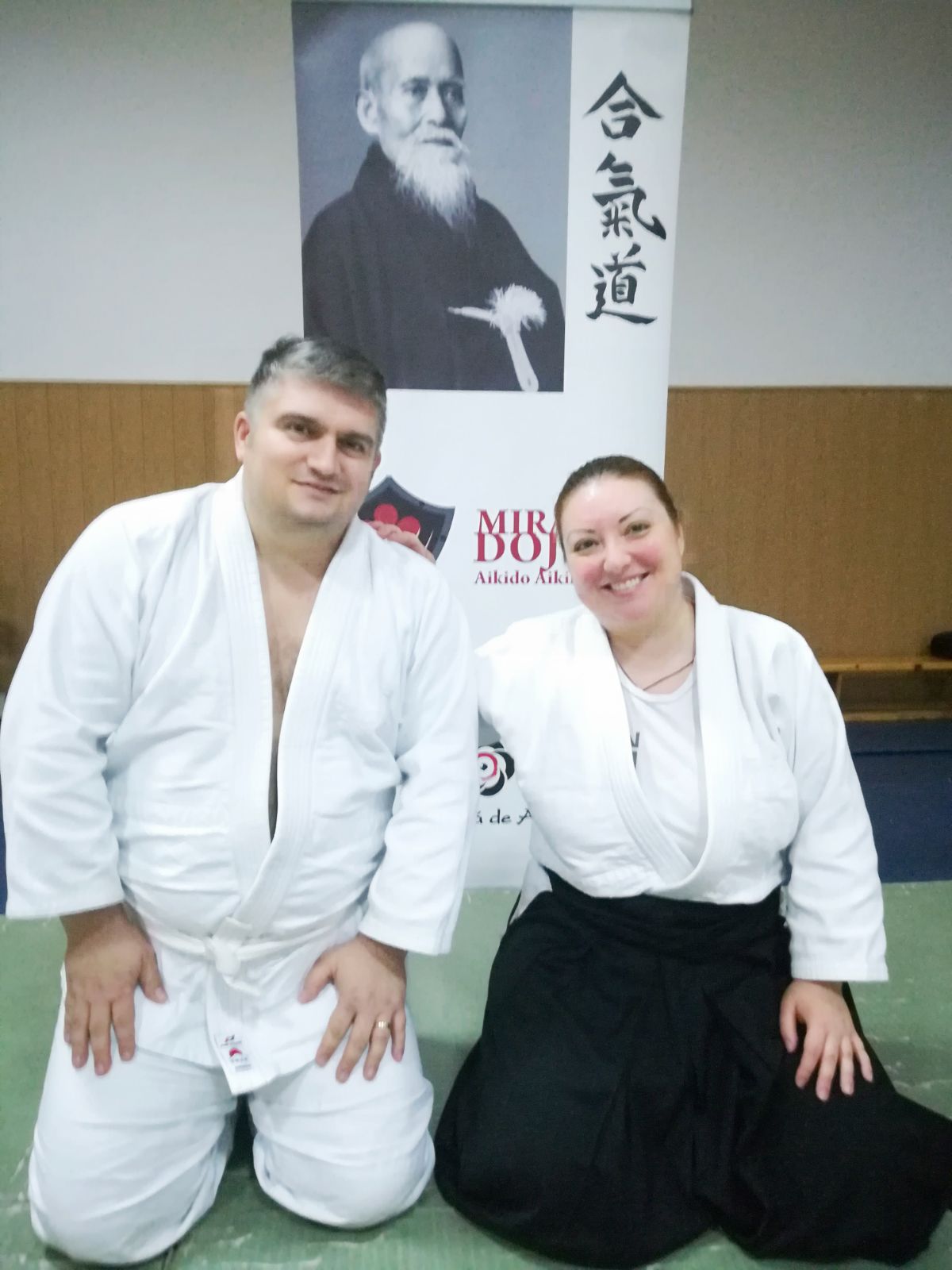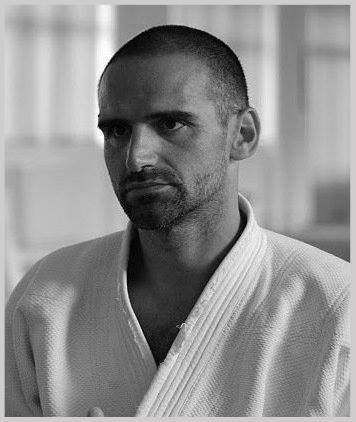

Micheline Tissier shihan: In Aikido, a person must be the same on and outside tatami

Micheline Tissier

In May, due to a seminar Micheline Tissier , 6 dan shihan held in Cluj-Napoca -Romania, we had a very lovely talk about how and why she started to practice Aikido in Japan, when she was a teenager. How the Art changed over the years and what she is hopping for Aikido, in the future to come. But most of all, I invite you to read the opinion of someone that not only practices and teaches Aikido, but also lives it!

Paula Alexandrescu (P.A.): I know you started to practice Aikido when you were a teenager. So, you have a very important and large perspective on how Aikido transformed over the years. Please, do tell us about this transformation of The Art over the years.

Micheline Tissier sensei (M.T.): Before going to Japan I didn’t knew about Aikido. I was in Japan, staying in my brother’s hose and there was a party one night. After the party we started talking and they told me that in order to have a visa, to be able to stay in Japan, I have to do something, to learn something and I have a choice between karate, judo, aikido, ikebana etc. But, all these disciplines and their names were new to me. Karate and judo I saw on TV, but the rest, including Aikido were new . And I asked my brother what do the French people that were at his party do. He said Aikido and so I said: Aikido then I’ll do too!

P.A.: OK, but since then how did Aikido changed?

M.T. : It’s a long story, I started Aikido in Japan with my than future husband to be, Christian Tissier and, of course, I followed him back  in France again when he returned. I practiced with him a lot 4 hours a day during the week  and 12 hours over weekends. I passed my second, third and fourth dan exams like any other student, but there was a lot of practice.  Sometimes Christian kept forgetting about me and when I was telling him that other are preparing for the third dan for example he was saying that yes, you also, but I forgot about you!

Coming back to your question, I think Aikido changed in a good way especially on the ukemi part. Back then, people were falling, but not like present days. It wasn’t such good ukemi. There was a progression of aikido, of technique. Same technique, but uke being better, also the dynamic of Aikido is better!

P.A. : When did you started to teach Aikido and why did you took this decision and how?

M.T.: It was a beginners class in Cercle Tissier, last year we were living in Paris, when Christian (Tissier shihan, 8 dan) decided to give me this class. He saw I was able to do it, but in the same time it was my first class. The same time I was teaching this beginners class, he was teaching in the higher ranks class and each time he was opening the door, check what I was doing and that was very stressful.  I said if you continue to do that I will stop. He respected my wish, he stopped doing that and I continued to teach that beginners class and after six months, he came to my class and told a few of my students they can come to his advanced class, but my students looked at him and told him that they prefer to stay with me. And from there, I started to extend and develop as teacher and since, didn’t stop! At that point I think he understood I was a good teacher and he stopped bothering me. (Laughter)

P.A.:  What do woman sensei bring new, or different, from man sensei?

M.T.: We don’t have muscles and when we grow, we develop and grow the technique and the speed. For that I say, we really do Aikido! Anyone that joins technique and speed without muscles can be better than someone with strength. It is the same Aikido, but when a man starts, he wants to use the muscles because is normal for man to do that, but not for women.

P.A.: You teach Aikido in many countries, in different continents, do you see different approaches on The Art?

M.T.: Yes, it depends on the sensei they fallow. For example, in France,  most of people  fallow Christian, but in USA not only him, so it is different, the perspective, the approach to Aikido technique,  from one sensei to another.  Where I went to teach, even having a different way to teach, people wanted to learn and were very open to me and my teaching.

P.A.: You started, as we earlier mentioned, to practice Aikido as a teenager, in Japan, for your visa, but how did your motivation changed over the years?

M.T.: I used to practice athletism, in a high level, I was champion of my country and I also stayed in a special place (school), for athletes, to train to become champions. At that point my parents decided to send me to Japan for more preparation, for 2 years. So, I was used to hard training. In that school for athletes, in France, if you didn’t had good results for 3 months on a road they kick you out. I was used to intensive and hard training, but still in Japan, when I started to practice Aikido, the teacher for beginners he only put us to walk  on our knees for the entire hour. That was the class. I was 15 years old, my feet and knees where bloody and I was in pain, but each day I had to come back! I think that it would have been impossible without the hard training in athletism before. But it was possible because I knew what hard training is!

P.A.:  What advice do you have for the Aikido teachers?

M.T.:  Always have a smile on your face and take good care of each person.

P.A.: But would you give a different advice to a woman sensei?

M.T.: Usually the expectation for a woman is to specialize in children. At least men do want that. They don’t think you can teach adults. They also tried that with me, but I categorically refused! I said I can give seminars for everybody, including children, but I am not specialized in children! It’s not that I don’t like it, but I want to teach adults and I’m not a children specialist.

P.A.: We have a difficult lifestyle, with lots of stress, and many fast social-political changes. Living in this challenging social environment, many martial arts specialists are optimistic and others pessimistic. What is your opinion regarding the future of  budo generally, as we know Aikido is budo?

M.T.: It is a difficult question. Aikido is the same, from the principles point of view, but the mentality of people changes each year. As I told you earlier, when I was practicing with Christian, we were practicing 12 hours each weekend. But then, people started to say that Saturday morning they want to take a long walk in the park. After, maybe is better just one day. So, now they practice only 3 hours each Sunday morning. After, they want to eat with the family, spend time with their children and I know is normal, but you cannot do all in one day. So, I don’t know what the future is, but my hope is that Aikido will remain Aikido, real budo!  Not like in China, with competition and so on. No, I want it to stay BUDO!
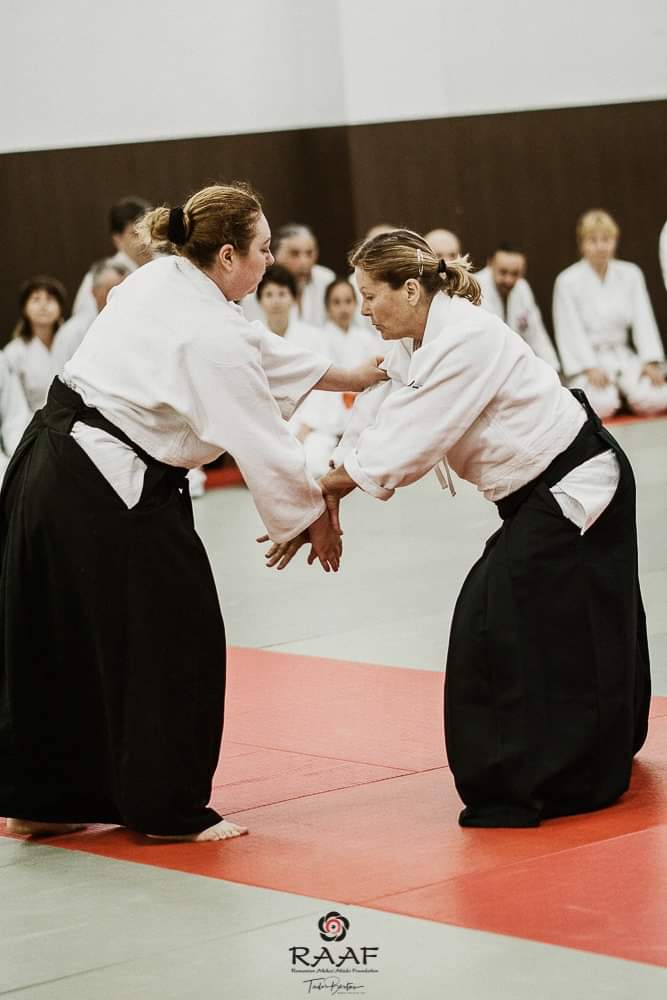
Micheline Tissier

P.A.: You’ve got to a level where not many people get, you have 6 dan and teach all over the world. What do you expect now from Aikido?

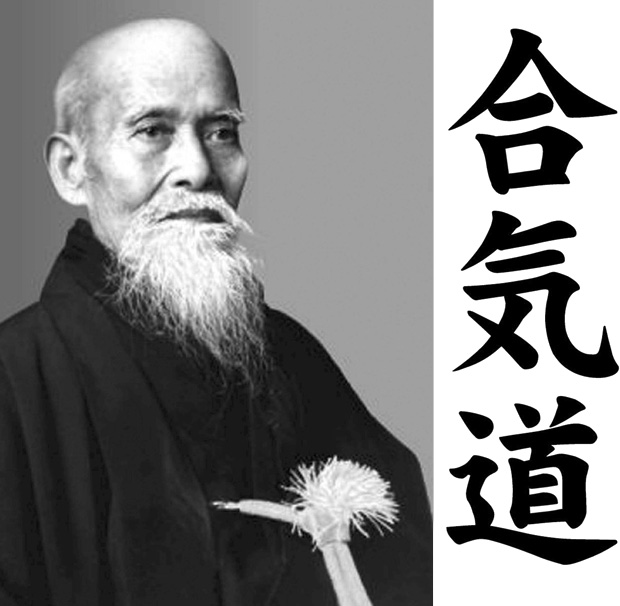
M.T.: I think I have all I dreamed and more. I never dreamed I would have so much and for that I am very happy. Each time I’m on tatami, students don’t know, but I look at O’Sensei Morihei Ueshiba’s portret and I say: Thank you! Because it’s very important for me (tears in the eyes).

P.A.: How do you aplly Aikido outside the tatami?

M.T.: I live with and an Aikido life, I cannot forget that. Everything I do on tatami I do the same in my day by day life! I am not different outside the tatami. If someone is different on tatami is because they haven’t understood something, they made a mistake. Because it is normal to be the same on and outside the tatami!

P.A.: You said you also dance. When did you start dancing and how did that help you in Aikido?

M.T.: The way you use your hips in dance is the same in Aikido and also many positions. For example, when you open your leg is the same in dance. Hips position is the same. If  you are a good dancer, you can become a good aikidoka. When I started Aikido, I was dancing for 8 years already and after in the same time.

P.A.: Can you tell us something that people don’t usually know about Micheline Tisser shihan?

M.T.: (Laughter) As I said earlier I’m the same person on tatami and outside of it. There is no secret about me! I have a good life, a good family, good children and I hope I’m a good grandmother! I have a good relationship with my ex-husband and his wife, everything is good! I’m happy!

P.A.: Thank you very much, sensei!

M.T: Thank you! It was a very nice moment!

May, 2019. Cluj-Napoca. Romania.

Jujitsu, Judo, and Aikido

Jujitsu, Judo, and Aikido are like three sisters.

Jujitsu is the Oldest sister. She has a bad temper and likes to fight. She is only interested in winning fights. She has fought many times and knows what is effective from countless experiences. Since she will fight anyone, she must have excellent technique to secure victory. You know what to expect when she comes for you, but still, it is not easy to stop her. And, if you had to be in a fight, you would want her standing next to you, and on your side.”

Judo is like Jujitsu’s younger sister. She is more interested in competing in events and not actual combat. She is more interested in the glory of competition, and not always survival. But she can and will fight if pushed. Years of training and competition has made her tough. And remember, she grew up with big sis who taught her a few tricks.”

Aikido is the youngest sister. She is not interested in war or competition, but she is familiar with its background. She seeks a peaceful solution always. She is also the most beautiful of her sisters. She is very graceful to watch. You always feel good just being in her presence. But, she is not incapable of defense. She can manage quite well on her terms, and she is very tricky. Even still, one should be aware that even if she fails, she still has two older sisters who jealously guard and watch over her.

“Family” relationship between the three arts.

Original source unknown !

ARMONIE VERDE

Pentru cei care ştiu mai puţin, „AI” din Aikido înseamnă armonie. La fel de importantă ca armonia interioară şi cea cu cei din jurul tău este şi armonia cu mediul înconjurător. Desigur, mă refer la Natură. Şi, din păcate, planeta noastră se află într-un punct în care poluarea a întrecut demult orice limită a bunului simţ! De fapt, aceasta este problema: BUNUL SIMŢ! Lipsa lui! 

Cred că poţi spune multe, dar cel mai puternic rămâne EXEMPLUL PERSONAL DAT! Astfel, la sfârşitul săptămânii trecute am transportat împreună cu unul dintre elevii mei, cu maşina lui personală, câţiva saci de materiale reciclabile. Au fost 3 saci plini cu peturi, pungi si varii recipiente de plastic, un sac cu metal, preonderent aluminiu, doze sau conserve, un sac cu sticlă şi unul cu hârtie şi cartoane diverse. La acestea s-au mai adaugat reviste şi vechi manuale şcolare, găsite rătăcite prin debara.

Toate aceste materiale reciclabile le-am strâns, în casă, în doar 8 luni, în condiţiile în care locuiesc cu încă o persoană. Deci, 6 saci, în 8 luni de la doar două persoane! Faceţi un calcul pentru căsuţa proprie, pentru o privire realistă asupra acestei probleme!

Toate peturile, sticlele, dozele, conservele şi restul de recipiente de plastic sau metal au fost spălate şi uscate. Cu excepţia sticlelor, după uscare, toate au fost presate. Aceste centre de reciclare îţi vor cântări fiecare tip de material şi te vor plăti pentru acestea. Preţul pe kilogram este modic, dar suficient cât să acoperi costurile pe care le ai cu apa şi detergentul consumate, pentru a le curăţa, înainte de a le duce la centrul de reciclare. 

Cred cu tărie că aceasta ar trebui să fie atitudinea noastră normală, faţă de planeta pe care locuim! Şi mai cred că, la armonie ajungi cu paşi mici şi siguri, făcuţi atât din grijă pentru ceilalţi, cât şi pentru întregul ecosistem.

Aikido nu se potriveşte tuturor, dar de reciclat toţi putem să reciclăm, să avem această minimă consideraţie faţă de planeta aceasta care, din păcate, nu mai este atât de „verde”! Paşii următori privesc debarasarea de aparatele electonice şi electorcasnice, precum şi modul în care putem să aruncăm uleiul de uz casnic, fără să poluăm apa.

Haideţi să reciclăm, haideţi să ne armonizăm cu Pământul!

Aikido 3 in 1 – Mirai Dojo – AikiRoDac – Itsushin Dojo

În frumoasa zi de 16 martie am participat alături de colegii mei din Mirai Dojo la un antrenament comun, împreună cu Itsushin Dojo și AikiRoDac, gazdele evenimentului, locul faptei fiind sala de sport a Școlii Generale nr. 157, din cartierul Militari, București.

Antrenamentele comune și seminariile sunt ocazii pentru fiecare aikidoka de a-și perfecționa tehnicile, sunt un fel de reglaj fin, în comparație cu hard-working-ul de la antrenamentele regulate. Atmosfera e, deci, un pic mai relaxată, fără a se face, însă, rabat de la etichetă. Antrenamentele comune sunt un prilej pentru a practica tehnici și cu alți aikidoka în afară de colegii de Dojo. Și asta mi-a plăcut poate cel mai mult, fiindcă am constatat că elevii lui Sensei Mihai Dulapciu exersează un aikido mai aplicat, mai centrat către posibilele atacuri din realitate. Tori lucrează un pic mai dur, ceea ce poate fi de folos, și mie mi-a plăcut. De asemenea, AikiRoDac propun, printre altele, tehnici de tipul 3 în 1, în funcție de riposta adversarului imaginar.

Sensei Nicolae Mitu, Itsushin Dojo, e tipul de dascăl care te atrage și te determină să-l asculți cu gura căscată, indiferent ce ar preda, chiar și matematică. E făcut să predea Aikido și, la cât de ocupat e, nu știu de unde găsește atâtea resurse pentru a fi mereu cu zâmbetul pe buze și cu glumele la purtător.

Mica mea victorie „de etapă” – Testimonial aikidoka Marian

După cum scrie și în cartea mea de identitate, mă numesc Marian Grecu. În luna mai 2017 am început să practic Arta Păcii la Mirai Dojo, păstorit de către sensei Paula Alexandrescu.

Aikidoka Marian & Paula sensei

Aikidoka Marian & Paula sensei

Cum am ajuns la Aikido? Sunt un tip care stă și pritocește luni întregi, înainte de luarea deciziilor importante din viață. În căutarea unui sport sau metode care să mă disciplineze, am ținut cont de două criterii, pe lângă dorința de a face ceva mișcare: să practic o disciplină care să mă relaxeze și care să-mi ordoneze gândurile, iar în plan secund să-mi însușesc și oarece tehnici de autoapărare, oleacî di batai, vorba ceea.

Am avut de ales, pe lângă Aikido, și dintre box sau ceva kick boxing, la sugestia unui prieten. Dar, ținând cont că în momentul în care m-am apucat de Aikido, aveam 37 de ani, fără o lună, multe kilograme în plus (cifră cu trei zerouri), și faptul că n-am mai practicat vreodată vreo disciplină sportivă, m-am îndreptat spre Aikido, despre care sensei Paula îmi spusese, într-o conversație privată, că:„ fiecare practicant „merge”, pe Cale, în ritmul său!”.

Dear sensei, the answer is „Yes!”

There are questions you can answer right away, there are questions one can never ever answer and there are questions you can answer after a while. Today, I can answer a question I received in the spring of 2015 from Dorin Marchis sensei.

Uke for Dorin sensei, 5 dan Aikikai Aikido at the Japanese Festival Seminar. March 2015, Bucharest-Romania.

Uke for Dorin sensei, 5 dan Aikikai Aikido at the Japanese Festival Seminar. March 2015, Bucharest-Romania.

But, before I say what the questions was I must explain a bit about the context and, most of all, I must say that sensei also said „Yes!” right away, when I asked him if I can open a dojo, and he also gave me the name for it, „Mirai”, which in Japanese means Future. If I remember correctly, he said he thought at this name with reference to my future. Once a teacher, always a teacher!

That spring I relocated myself, for about a month and a half, in Cluj-Napoca,

Dojo-urile bucureștene membre FRAA au dat startul evenimentelor de Aikido

Sensei Dorin împreună cu Mihai Vladu, 3 dan, dojo cho Yume București și unul dintre organizatorii evenimentului

Sensei Dorin Marchiș împreună cu Mihai Vladu, 3 dan, dojo cho Yume București și unul dintre organizatorii evenimentului.

C.S. Aiki Budo, Rakuten dojo, Yume dojo, Nobori dojo, Shinri dojo, Daishin dojo și noi, Mirai dojo, toate entități membre ale Fundației Române de Aikido Aikikai (FRAA) am organizat anul acesta, în zilele de 27 și 28 ianuarie,  în Capitală, un seminar de Aikido desfășurat sub îndrumarea lui Dorin Marchiș sensei, 5 dan și președintele FRAA.

La cele trei antrenamente sau mai bine spus lecții ținute de către sensei Dorin Marchiș au participat 107 persoane

Arta de a Aikido şi arta de a Picta

13198418_993869377315128_8006745897166084749_o

Silviu Ghimpoșanu – 6 kyu Aikido Aikikai

Aseară, după antrenament, stăteam la un puf-puf cu un bun amic, şi îi povesteam cu patos (aşa cum fac de fiecare dată când îmi place ceva foarte mult!) despre Aikido.
Inevitabil, am ajuns şi în situaţia în care a trebuit să îi şi exemplific. I-am arătat un Ikkyo (asta şi shihonage ştiu şi eu!<pentru nivelul 6 kyu>).

– Uite, tu mă prinzi aşa….
– Eu fac, pac şi intru aşa

… tu te întorci acum… şi…

Sensei I.Perpelici: Progresul tehnic în AIKIDO nu înseamnă nimic fără cel spiritual

ulian Perpelici sensei, 5 dan Aikido Aikikai și vicepreședintele Fundației Române de Aikido Aikikai

Iulian Perpelici sensei, 5 dan Aikido Aikikai și vicepreședintele Fundației Române de Aikido Aikikai

Am  auzit de multe ori spunându-se că un maestru face să pară simple cele mai complicate lucruri. Când l-am văzut prima dată pe tatami, pe sensei Iulian Perpelici, 5 dan Aikido Aikikai am înțeles în sfârșit această frază, semnificația ei profundă. Maeștrii reușesc să facă cu eleganță și naturalețe, ceea ce nouă învățăceilor ne iese cu mult efort și multă stângăcie la început. Văzând la sensei Perpelici abilitatea de a face să pară ușor de executat și cele mai complexe tehnici am vrut să aflu mai multe despre parcursul său pe Calea Aikido-ului și despre practicanții români de ieri și de azi, pentru că sensei este unul dintre primii practicanți din țară. Totodată, a răspuns cu multă generozitate, candoare și umor tirului de întrebări „indiscrete”, după cum veți putea citi în cele ce urmează.

W.Vriesman: Understand the principles and you can make easily your own Aikido

Împreună cu Wilko Vriesman sensei, 6 dan la seminarul ce s-a ținut cu ocazia Congresului IAF. Cluj-Napoca, septembrie 2014.

Împreună cu Wilko Vriesman sensei, 6 dan la seminarul ce s-a ținut cu ocazia Congresului IAF. Cluj-Napoca, septembrie 2014.

I first met sensei Wilko Vriesman, 6 Dan Aikido Aikikai in 2012 at the first seminar held in Romania by Christian Tissier sensei, 8 Dan Aikido Aikikai and hombu dojo shihan. Sensei W. Vriesman is a very interesting person and teacher for me as an aikidoka. Very efficient and professional on the tatami, but also very warmhearted and ready to answer any question, anytime. But, what striked me the most is that he is the same person, he has the same character in and outside the tatami kind, ready to teach you, very into the art he is working so hard to pass on to the next generations and a big sense of humour. Here is the result of a nice chat me and sensei Wilko had in april 2013.